


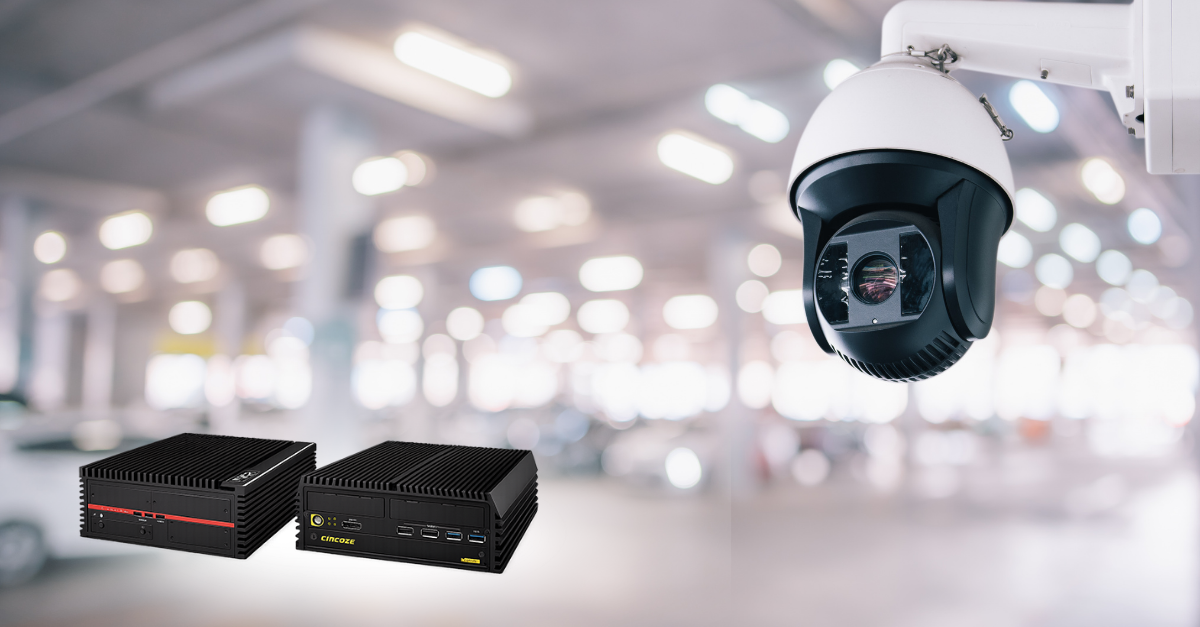
Choosing the Right Industrial SSDs for Security and Surveillance Systems
Blog
Surveillance systems are write-intensive and always on. Edge deployments require low latency to support applications like object detection and facial recognition, where delays directly impact system performance. At the same time, data is typically retained for 30 to 90 days before being transferred to centralized infrastructure, placing sustained pressure on storage devices.
Hard disk drives (HDDs) play a role in high-capacity backend storage, but they are often less reliable when deployed in environments exposed to vibration, extreme temperatures, and continuous write activity. Solid-state drives (SSDs), by contrast, provide faster data access and greater resilience under these conditions, making them better aligned with distributed surveillance deployments.
Key Requirements for SSDs in Edge Surveillance Systems
Endurance is one of the most important factors when selecting SSDs for surveillance applications. SSDs have a finite write endurance, so lifespan is directly tied to workload intensity. Industrial SSDs offer higher endurance, longer mean time before failure (MTBF), and more effective wear leveling; higher-capacity drives can further extend usable lifespan by distributing write across more NAND cells.
For surveillance systems deployed in outdoor or industrial settings where heat, dust, and vibration are common, industrial SSDs can support extended (-20℃ to +70℃) or wide (-40℃ to +85℃) temperature ranges. It’s important to account for overall system design when considering operating temperature. Deployments inside sealed enclosures can raise internal temperatures beyond ambient conditions, increasing thermal stress on storage components.
Edge surveillance systems are also at risk of experiencing inconsistent or interrupted power, increasing the risk of data loss. Some industrial SSDs feature power loss protection and data integrity features to mitigate these risks. Encryption may be required to protect sensitive data too.
SSD Evaluation Checklist for Surveillance Systems
When evaluating SSDs for security and surveillance applications, OEMs should consider:
- Endurance: Can this SSD support the write workload of our system?
- Temperature Range: Will this SSD operate reliably within the environmental conditions of our deployment?
- Vibration Tolerance: Is the SSD rated for the mechanical stress of our installation environment?
- Power-Loss Protection: How does the system handle unexpected power interruptions? Is data at risk?
- Latency and Performance: Can this SSD keep pace with our real-time analytics and AI processing requirements?
- Bill of Materials (BOM) Stability: What do we have to gain from a locked BOM?
When assessing costs, it’s easier to evaluate based on the upfront, but total cost of ownership is relevant. Lower-cost commercial SSDs may fail sooner under continuous workloads, leading to higher maintenance costs in hard-to-access installations like traffic systems. Industrial SSDs provide more predictable performance and longer service life, which reduces unplanned downtime.
Keep in mind that SSD and HDD pricing continues to increase, with supply constraints expected to continue through 2027. High-density storage is often required to support multi-camera and AI workloads, making early planning around capacity and supply increasingly important. Securing supply early via forecasted orders leveraging bonded inventory is a practical consideration for large-scale deployments, and the New Era Electronics team is prepared to advise as the global market conditions continue to change.
For OEMs and integrators, selecting the right storage technologies comes down to aligning specifications to the demands of the application.
Explore industrial SSD solutions built for 24/7 surveillance and edge AI.